
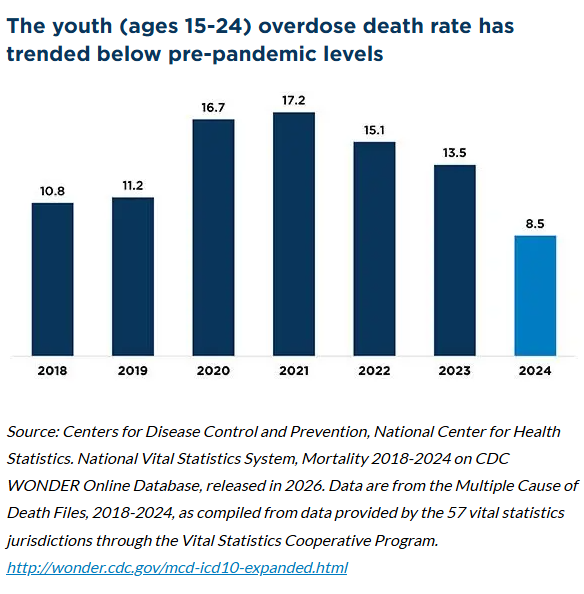
I love the research Child Trends does. Sometimes they have good news, and this is one of those posts, but when you look at detail it raises some disturbing questions.
Youth Overdose Death Rate Trending Below Pre-Pandemic Levels | Child Trends
The national news is awesome – so I wondered what the Washington-specific trend was. The article used a data source at the CDC. There’s an ominous tag on the data dashboard that says, “CDC’s website is being modified to comply with President Trump’s Executive Orders.” but for now it works fine.
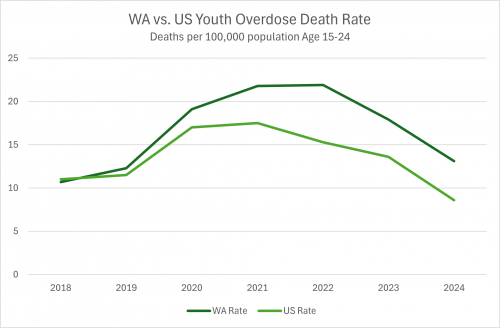
My chart is based on slightly different data – the Child Trends chart is “age adjusted” which means that it adjusts the data point for every year to statistically compensate for slight changes in the mix of ages in the population. There are reasons to do this if you are comparing multiple states with differently aged populations. Mine is based on the actual death rate. The values are very similar.
Washington starts out slightly below the US rate per 100,000 youth in the population. (There were 972,558 youth 15-24 years old in Washington in 2024.) The US rate has now fallen below where it was in 2018. Washington’s has not, though the trajectories are similar (and great). We start slowing later than the national data. We were still almost 30 deaths a year higher in 2024 than we were in 2018.
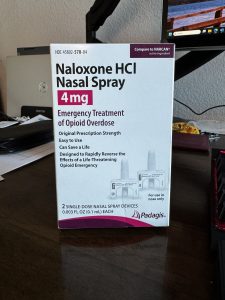
Why? You can’t tell from this chart, or from the data file. The article in Child Trends posits the availability of Naloxone. This is certainly part of the answer. I carry it in my car and have some sitting on my desk. I’m guessing that I’m unlikely to use it in the house, but you never know…
My wonder was if Washington’s late restart of in-person high school contributed to this. There are no peer-reviewed studies pointing to this directly, and most of what I read pointed to increases in the lethality of the drug supply due to contamination with fentanyl instead of specific school closure policies. For example:
“Sharp increases in adolescent drug overdose deaths, despite flat or declining drug use rates, and no increase in deaths from alcohol or most drugs, reinforce that rising fatalities are likely driven by an increasingly toxic, IMF-contaminated drug supply.”
Sharp Increases in Drug Overdose Deaths Among High-School-Age Adolescents During the US COVID-19 Epidemic and Illicit Fentanyl Crisis
Another source saying the same thing is KFF. Their article https://www.kff.org/mental-health/how-schools-have-responded-to-the-youth-fentanyl-crisis/ basically says that youth have access to substance use prevention education at school, and sometimes treatment is available there, plus more schools stock naloxone.
So, I don’t know the answer as to why Washington’s recovery was later than the rest of the country. There are differences in the illicit drug supply between various regions of the country. Maybe that’s it.
Claude suggests that I do some primary research on the topic and helpfully points me to a variety of data sources and tells me that it’s “methodologically difficult to take this question on.” I’ll pass, and be happy that these deaths are declining.